Restoring teeth damaged by cavities:Function and Aesthetic Recovery
Teeth decayed by cavities do not regenerate or heal naturally without professional dental treatment. Restore teeth damaged by cavities at Samdae Dental!
Cavity Treatment, Don't Put It Off!
If you delay treatment because the pain feels minor or out of fear of dental visits, the decay will worsen, causing intermittent severe pain, or bacteria may infect the dental pulp and nerve tissue, requiring root canal treatment.
Therefore, cavity treatment is the most fundamental yet vital aspect of dental care. Early detection and prompt treatment through regular dental visits and checkups are the start of healthy dental care habits.
Samdae Dental Cavity Treatment Q&A
A care system that empathizes with our patients
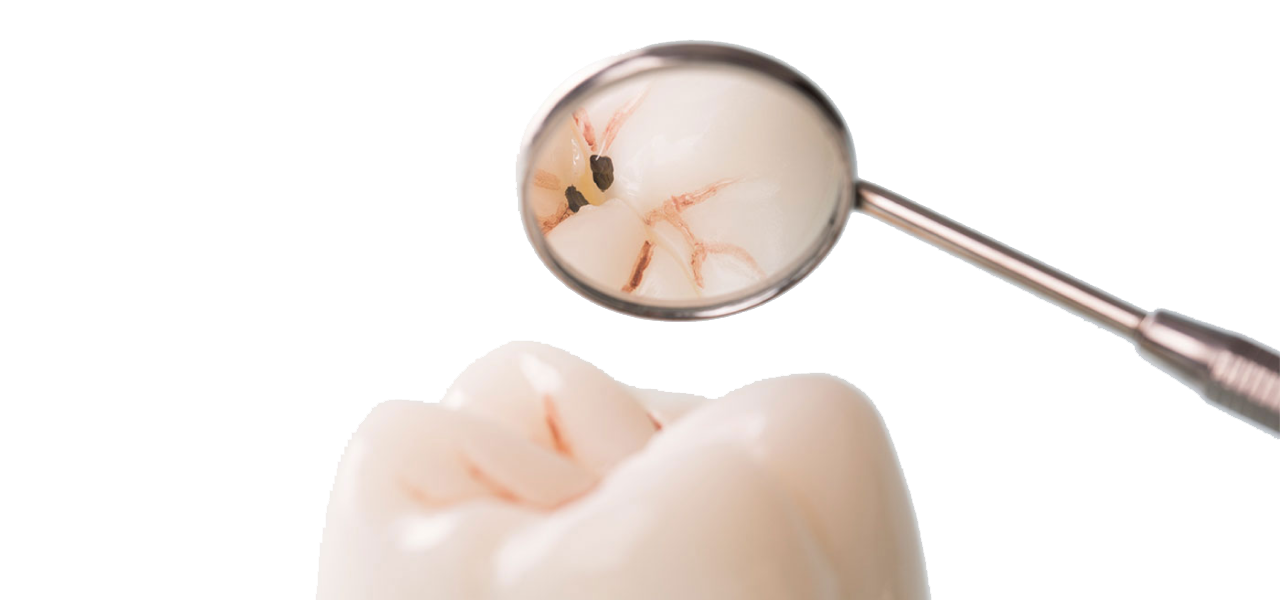
QWhere do cavities typically occur?
A✓ Molars are most susceptible to cavities due to their deep, narrow grooves and pits. ✓ Food debris easily gets trapped between teeth and is difficult to remove, leading to interdental cavities. ✓ If the gum line wears down due to improper brushing technique, cervical cavities can develop.
QWhat causes tooth decay?
AAfter eating, food particles and sugars linger on and between the teeth. Bacteria in the mouth feed on these sugars and produce acid, which demineralizes the tooth structure and results in cavities. Thorough brushing after eating is therefore essential.
QHow can cavities be prevented?
ADuring childhood, routine fluoride applications and dental sealants are very helpful. In adulthood, proper brushing is the fundamental method to prevent decay. In addition, removing tartar through regular scaling and detecting cavities early through periodic dental exams is strongly recommended.
Stages of Tooth Decay and Treatment Methods
Customized care tailored to decay stage and symptoms
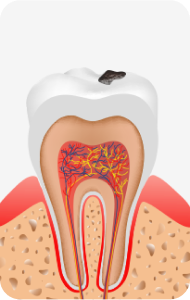
Stage 1Enamel Decay
Decay limited only to the outermost layer of the tooth, the enamel. Pain or sensitivity is rarely felt, and it usually appears only as a faint dark line or speck.
Prevention via regular checkups and resin restoration
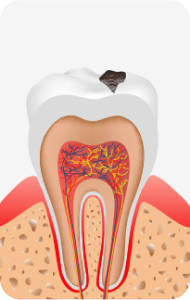
Stage 2Dentin Decay
Decay that has progressed into the dentin beneath the enamel. Bad breath may develop, sensitivity occurs with hot and cold foods, and decay progresses faster.
Resin restoration or inlay prosthodontics
Stage 3Pulpitis Decay
The decay has reached the internal nerve tissue (pulp) of the tooth, causing severe pain that worsens when consuming cold or hot foods.
Root canal treatment and crown restoration
Stage 4Root Involvement
Infection has traveled down the pulp canal to the root tip, destroying surrounding tissues. Abscesses, swelling, or tooth mobility may occur.
Tooth extraction and dental implant
Cavity Treatment Methods
Preserving natural teeth whenever possible without extraction
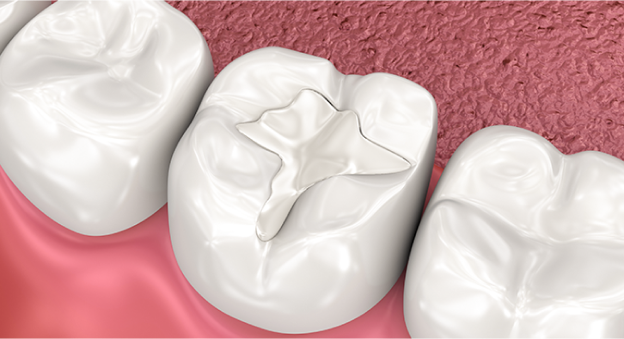
Resin
Composite resin is a tooth-colored, aesthetic restorative material ideal when decay is minimal. After removing the decayed portion, the tooth is filled with resin. Same-day completion is often possible for smaller cavities.
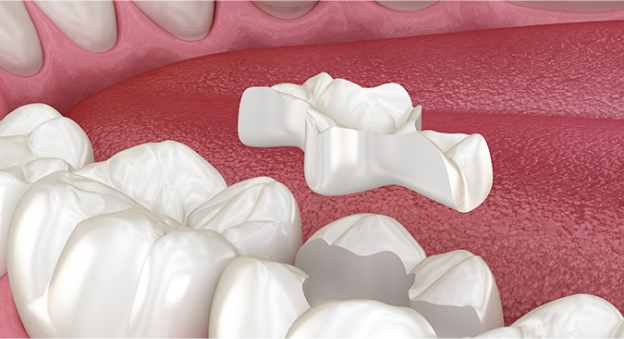
Inlay
Crafted to match the natural shade of your teeth, inlays are ideal for moderate decay and visible surfaces. After eliminating decay, an impression is taken to fabricate a custom prosthetic piece that restores tooth shape and function.
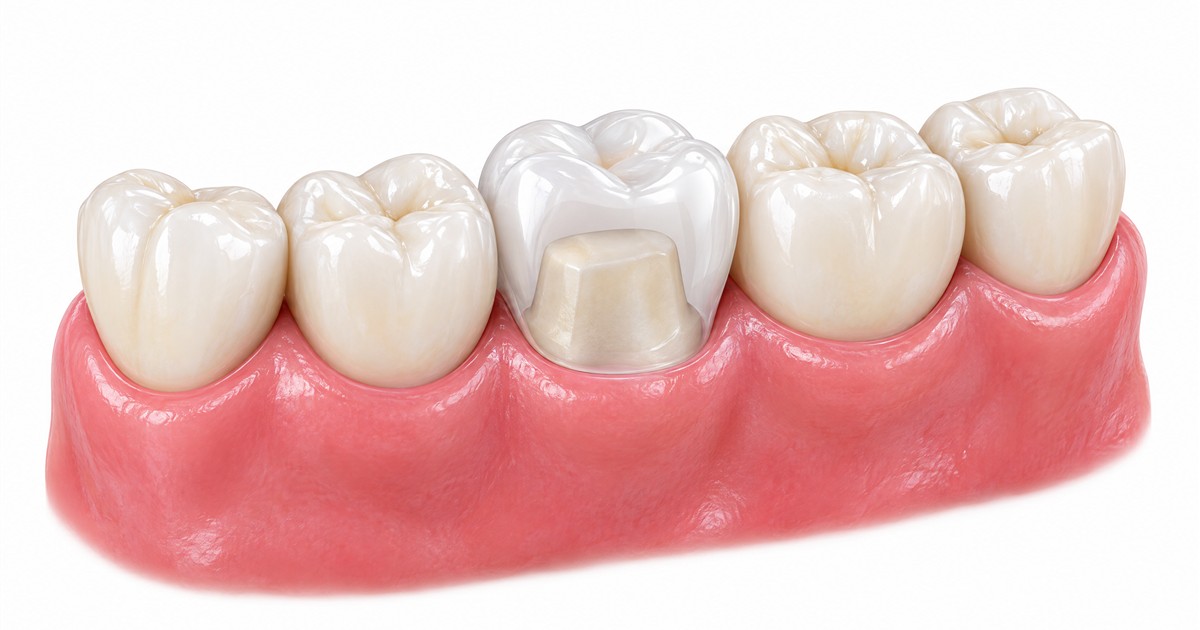
Crown
Used for extensive decay that exceeds the scope of an inlay. Often paired with root canal treatment, a crown encases the entire tooth to protect its structure and restore masticatory function.
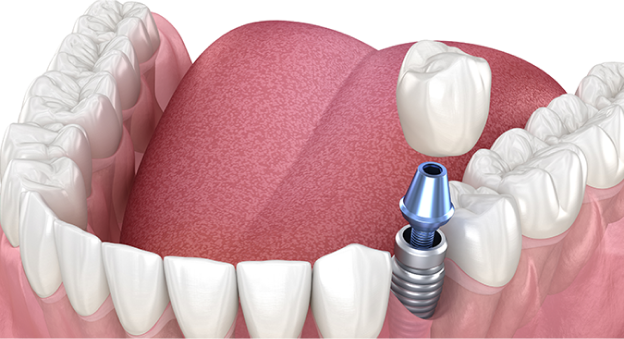
Dental Implant
Performed when severe decay has led to complete loss of tooth function and structure. To prevent damage to neighboring teeth, an implant is placed to reproduce natural tooth function and permanently replace the lost tooth.
Recommended for Cavity Treatment
Conservative care that determines tooth longevity
When you notice black spots or lines on teeth
When you experience sensitivity and pain while eating
When unexpected bad breath develops
When teeth are sensitive to hot or cold foods and drinks


 Stage 1Enamel Decay
 Stage 2Dentin Decay
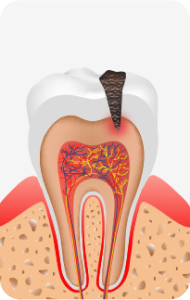 Stage 3Pulpitis Decay
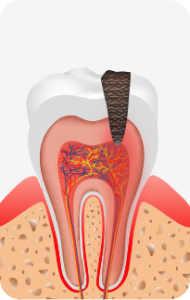 Stage 4Root Involvement